
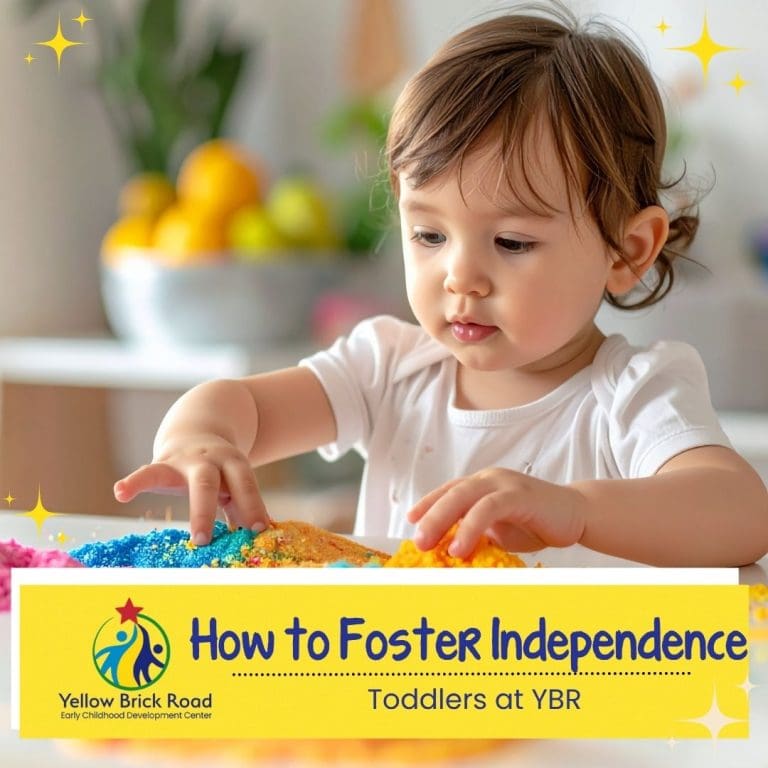
Toddlers are busy, curious, and determined little humans. They want to help, explore, and try things on their own — even when it takes longer or gets a little messy. This drive toward independence is a natural and essential part of early childhood development, and the way adults respond can either strengthen or slow it.
At Yellow Brick Road, we intentionally create environments that help toddlers build confidence, self-help skills, and a sense of accomplishment. The good news is that families can foster the same independence at home with a few simple, supportive strategies.
Why Independence Matters in the Toddler Years
Toddlers learn through hands-on experiences. When they are encouraged to try things for themselves, several important developmental benefits follow:
- Increased confidence and self-esteem
- Better problem-solving skills
- Improved motor development
- Stronger communication
- More cooperation during daily routines
Supporting independence doesn’t mean stepping back completely. It means giving toddlers the chance to try, offering guidance only when needed, and celebrating their effort as much as their success.
Practical Ways to Encourage Independence at Home
- Create Simple, Toddler-Friendly Routines
Predictability helps children feel capable. When routines follow a consistent order, toddlers learn what comes next and begin doing those steps independently.
Examples:
- Putting shoes in a basket
- Washing hands before meals
- Choosing a bedtime book
Consistency builds mastery.
- Offer Real Choices
Choices allow toddlers to feel empowered. Keep choices simple and controlled.
Examples:
- “Would you like the blue cup or the yellow cup?”
- “Do you want to read this book or that one?”
- “Should we clean up blocks first or cars first?”
Two choices are often enough.
- Slow Down to Let Them Try
Adults naturally want to help, especially when time is tight. But giving toddlers a little extra time to attempt a task teaches problem-solving and resilience.
Consider pausing before stepping in.
They may surprise you with what they can do.
- Use Child-Sized Tools and Setups
Independence grows when the environment is designed for little hands.
You might try:
- A low hook for coats
- A small pitcher for pouring
- A stool at the sink
- A basket with a few clothing choices
When materials fit the child, success becomes possible.
- Invite Them to Help with Real Life Tasks
Toddlers love purposeful work. Including them in everyday tasks builds skills and connection.
Examples:
- Wiping the table
- Stirring ingredients
- Watering plants
- Sorting laundry
These moments teach responsibility and pride.
- Focus on the Process, Not Perfection
Independence is built through effort, not flawless results.
Instead of saying, “Let me fix that,” try:
- “You worked hard on that.”
- “You tried again and figured it out.”
- “Thank you for helping.”
Encouragement fuels confidence and persistence.
What Independence Looks Like in Our Classrooms
Across our schools, independence is woven into daily practice.
You’ll see toddlers:
- Serving themselves snack
- Cleaning up spills with real tools
- Choosing their activities
- Putting materials back where they belong
- Caring for plants and pets
- Helping their classmates
These experiences build foundational life skills and give children a sense of ownership in their environment.
A Final Thought: Independence Builds Strong, Capable Children
A toddler’s desire to do things on their own is not a challenge to overcome — it’s a strength to nurture. With the right support, children gain confidence, resilience, and a deeper belief in their own abilities.
As partners in your child’s growth, we love helping toddlers discover what they can do. And at home, even a few small changes can make a big difference in encouraging independence.