
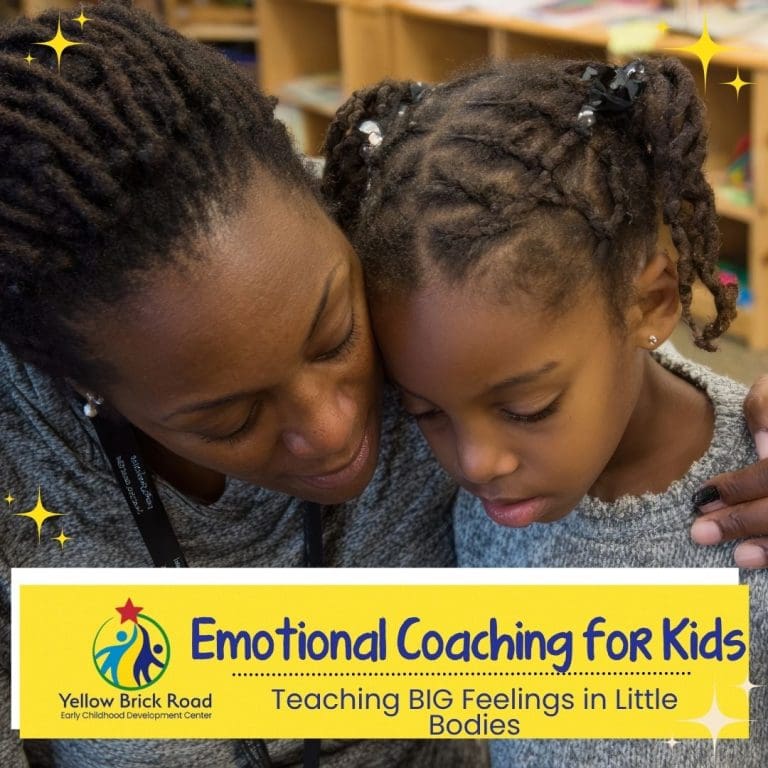
Young children experience big emotions every single day — joy, frustration, excitement, sadness, curiosity, and everything in between.
While their hearts feel these emotions deeply, their brains are still learning how to understand and manage them.
That’s where emotional coaching comes in — helping children name, understand, and navigate their feelings safely.
At Yellow Brick Road, Seeds to Seedlings, and Sonnet Montessori, we see emotional coaching as one of the most important parts of early learning. It’s not just about managing behavior; it’s about shaping lifelong skills for empathy, communication, and self-awareness.
What Is Emotional Coaching?
Emotional coaching means guiding children through their feelings rather than trying to stop them.
Instead of “Don’t be sad,” we say, “It’s okay to feel sad — I’m here with you.”
This approach builds trust, teaches language for emotions, and helps children learn that all feelings are valid — even the tough ones.
Through emotional coaching, children begin to:
- Recognize what they feel
- Express those feelings with words or actions
- Learn calming strategies
- Understand how their emotions affect others
When children feel understood, they are more likely to calm themselves, problem-solve, and reconnect after difficult moments.
Why It Matters in Early Childhood
The early years are the foundation for emotional intelligence. A child’s ability to understand and manage their emotions affects:
- Relationships with peers and teachers
- Learning readiness, since calm brains are open to learning
- Resilience, or the ability to recover from challenges
- Confidence, as they feel more capable managing tough situations
Children who receive emotional coaching at home and school often grow into empathetic, communicative, and adaptable adults.
How We Practice Emotional Coaching in Our Schools
Across our classrooms, you’ll see emotional coaching in action every day:
- Teachers narrate feelings: “I see you’re frustrated because the block tower fell.”
- Children are offered choices and tools for calming down — breathing, drawing, sensory play, or quiet time.
- Classrooms include visual feeling charts or “peace corners” where children can name emotions and choose how to reset.
- Teachers model empathy by using calm tones, kind words, and problem-solving language.
These moments teach children that emotions are not problems to hide but experiences to understand.
How Parents Can Practice Emotional Coaching at Home
You don’t need special training — just presence, patience, and a few simple habits.
- Name the Feeling
Use clear, simple words: “You’re mad because it’s time to leave the park.”
Naming emotions helps children make sense of what’s happening inside.
- Stay Calm
This is HARD!!! Your calm body and voice are their emotional anchor.
Children learn to regulate by watching how you respond to frustration, disappointment, and stress.
- Validate, Don’t Fix
Instead of jumping straight to solutions, try empathy first:
“I understand — that’s hard.”
Validation helps children feel seen, which often calms the storm.
- Offer Coping Tools
Try deep breathing, a comfort object, or a quiet space.
Over time, your child learns which strategies work best for them.
- Reflect Afterward
When emotions settle, talk about what happened and how they managed it.
Reflection turns experience into understanding.
A Final Thought
Every emotional moment is an opportunity to build connection and confidence.
By slowing down, naming feelings, and staying calm, we teach children that emotions are safe — and that they have the power to handle them.
At our schools, we partner with families to nurture both hearts and minds, helping every child grow into a kind, resilient, emotionally intelligent human being.