
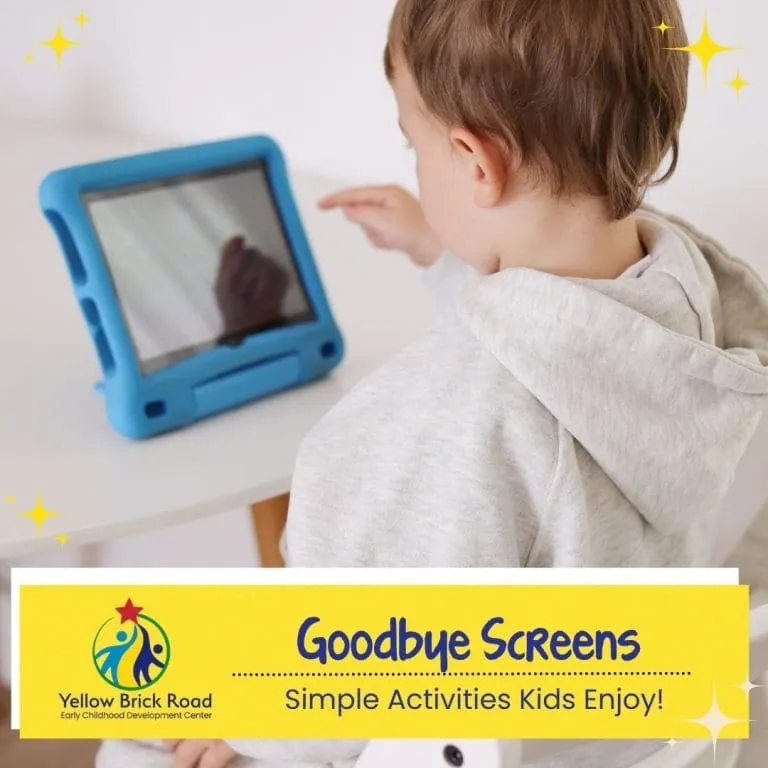
As the holidays approach, routines shift — and with more time at home, many parents notice screens creeping back into daily life. Between chilly weather, busy schedules, and the need for a little quiet time, it’s easy for tablets or TVs to take center stage. Ms. Rachel is definitely a household favorite of ours!
But even short breaks from screens can make a big difference for children’s growth and connection. That’s why at Yellow Brick Road, we love encouraging screen-free play that builds imagination, independence, and joy — no Wi-Fi required.
Here are simple, low-prep ideas that kids genuinely love — and that families can actually enjoy together.
Why Screen-Free Time Matters
When children play without screens, their brains do the heavy lifting — creating stories, solving problems, and exploring creativity.
Research shows that screen-free activities strengthens:
- Focus and attention span
- Language and social skills
- Emotional regulation
- Creativity and problem-solving
- Fine and gross motor coordination
It’s not about eliminating technology completely — it’s about giving children time to engage with the real world through touch, movement, and imagination.
Screen-Free Activities for Children
Infants (Birth–18 months)
At this stage, every sensory experience helps babies learn.
Try these calming, connection-based ideas:
- Texture play: Offer safe materials to explore — soft fabric, wooden spoons, silicone brushes.
- Mirror play: Babies love watching their own reflection and facial expressions.
- Music moments: Sing familiar songs, clap to the rhythm, or play gentle instruments.
Simple repetition builds trust and memory — no screen can replicate that.
Toddlers (18 months–3 years)
Toddlers are hands-on learners. Give them simple materials that let them explore cause and effect:
- Sensory bins: Fill a bin with rice, beans, or water and add cups, spoons, and small toys.
- Sorting fun: Sort socks, toy animals, or colored blocks by shape or color.
- Nature walks: Collect leaves, sticks, and rocks. Talk about what you see and hear.
- Kitchen helpers: Let them mix pancake batter or tear lettuce for dinner — they love being part of your “team.”
The key is involvement. Toddlers thrive when they feel useful.
Preschool & Pre-K (3–5 years)
Preschoolers are bursting with imagination. Give them space to lead their own play:
- Build a fort: Blankets, pillows, chairs — instant fun and endless storytelling.
- Homemade art studio: Set out crayons, washable paint, and recycled materials. Let them create freely.
- Dance party: Play music and let them invent their own moves.
- Pretend play: Restaurants, grocery stores, superheroes — you’ll be amazed by their creativity.
Encourage independence by letting them make choices: “Would you like to draw or build today?”
School-Age Kids (5+)
Older children enjoy creative challenges and projects that give them a sense of mastery:
- Cooking together: Let them read the recipe, measure, and mix.
- STEM play: Use household items for building — towers, bridges, or ramps for toy cars.
- Family games: Board games and puzzles teach patience, strategy, and teamwork.
- Writing & storytelling: Encourage them to make their own holiday book or play.
These projects also help strengthen executive functioning — the skills kids need for focus, organization, and follow-through.
Tips for Creating a Screen-Free Routine
- Start small. Try one screen-free hour after school or before bedtime.
- Model it. Kids follow your example — set down your phone, too.
- Prepare options. Keep a basket of art supplies, books, or sensory toys handy.
- Rotate activities. Novelty keeps play fresh without buying new toys.
- Celebrate creativity. Praise effort and imagination, not just the finished result.
When screen-free time becomes a family habit, it feels less like restriction and more like discovery.
A Final Thought
Screens will always have a place in our modern world, but nothing replaces real play — the kind that builds relationships, confidence, and creativity.
This holiday season, take time to unplug, slow down, and rediscover the magic of connection.
You might be surprised by how much your child — and you — love what happens when the screen goes dark and imagination lights up.