
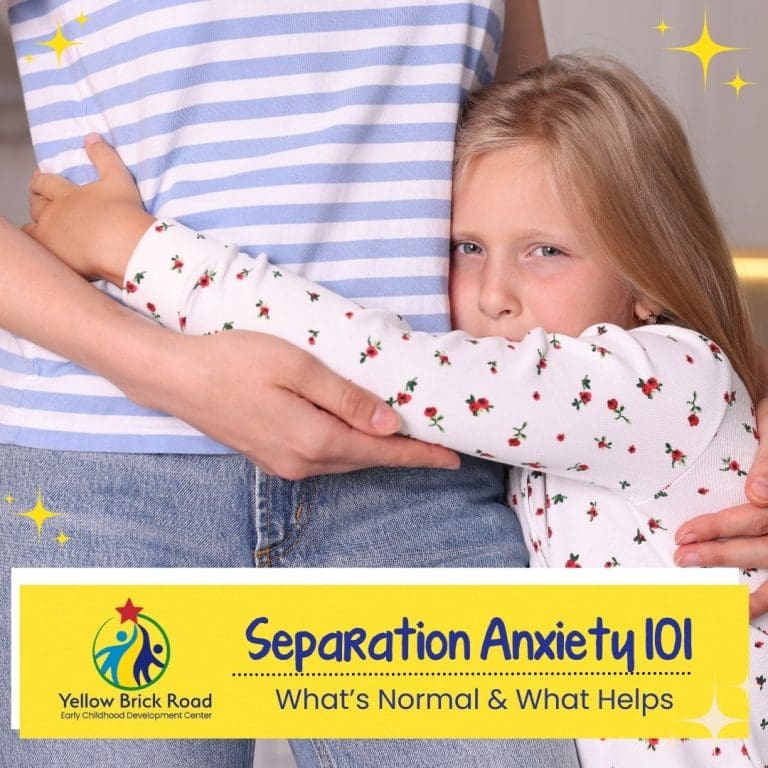
Separation anxiety is one of the most common — and most emotional — parts of early childhood. Whether your child is starting in an infant room, transitioning into toddlers, or entering a brand-new preschool class, goodbyes can feel big for both parents and children.
The good news?
Separation anxiety is normal, healthy, and temporary.
It’s a sign that your child has built a secure attachment — they love you, trust you, and rely on you for safety.
At Yellow Brick Road, we support families through this stage with patience, empathy, and consistent routines. Let’s look at why separation anxiety happens and how to gently guide your child through it.
Why Separation Anxiety Happens
Young children don’t yet understand time the way adults do. When you leave, they’re unsure when you’ll return — or even if you will. Their brains are still developing the ability to hold onto the concept of trust without seeing you right in front of them.
Separation anxiety is most common at:
- 8–12 months — when babies begin to understand object permanence
- 18 months–2.5 years — when toddlers crave independence but need reassurance
- New transitions — new classrooms, teachers, routines, or siblings
- After holidays or long weekends — when routine changes and together-time increases
It may come and go — and that’s completely okay.
What Separation Anxiety Looks Like
Every child expresses it differently, but common signs include:
- Crying during drop-off
- Clinging to a parent
- Resisting transitions
- Feeling upset when saying goodbye
- Seeking comfort or routine after separation
These behaviors aren’t signs of misbehavior.
They’re signs of development, connection, and growth.
How We Support Separation Anxiety in Our Schools
Our teachers spend time building strong relationships so your child feels safe, loved, and excited to learn.
We focus on:
- Warm, predictable routines
- Comforting transitions (a favorite book, song, or job)
- Gentle redirection into engaging activities
- Emotional coaching (“It’s okay to miss Mom. She always comes back.”)
- A consistent caregiver who becomes their trusted person in the classroom
Within minutes — or sometimes days — most children settle happily into play once they feel secure.
How Parents Can Help at Home
A calm, confident goodbye sets the tone for your child’s day. Here are simple ways to make drop-off smoother:
- Keep Goodbyes Short & Consistent
A quick hug, a kiss, and a predictable phrase (“I’ll be back after snack!”) build trust.
- Avoid “Sneaking Out”
It may feel easier, but children need to know you can leave and come back.
- Create a Goodbye Ritual
A secret handshake, a special hug, a high-five — something your child can expect every day.
- Stay Calm and Confident
Your child looks to your body language.
A steady, warm goodbye says “You are safe here.”
- Validate Their Feelings
“It’s okay to feel sad. I always come back.”
Validation eases their worry and builds emotional resilience.
- Celebrate the Reunion
After school, reconnect with joy:
“I missed you! Tell me about your day.”
This reinforces that separations lead to reunions.
When to Reach Out for Support
While separation anxiety is normal, you’re never alone in it.
If it lasts longer than expected, escalates suddenly, or seems to distress your child more than usual, our teachers and directors can help create a personalized transition plan.
You are your child’s strongest support — and we are here to partner with you every step of the way.
A Final Thought
Separation anxiety doesn’t mean something is wrong.
It means your child has a loving bond that they are learning how to carry with them into the world.
With patience, consistency, and connection, your child will learn that goodbyes are temporary — and that new adventures, caring teachers, and joyful friendships await them at school.